FMA Builders is one of the high-end residential builders Amplified Lifestyles collaborates with. One of their principals, Peter Lau, has a career that spans the esoteric of apprenticing with a Japanese master temple carpenter to the practical of running world-class projects for international developers. He started at FMA in 2000 as their first project manager, working with founders Dave Forde and Charles Mazzola. After six years, he pursued other professional opportunities. Peter returned to FMA in 2018 as a principal. In addition to his work at FMA, he serves on SFMOMA’s Architecture + Design Accessions Committee.
AL: You recently joined the Architecture + Design Accessions Committee of SFMOMA, what is your favorite piece in the collection?
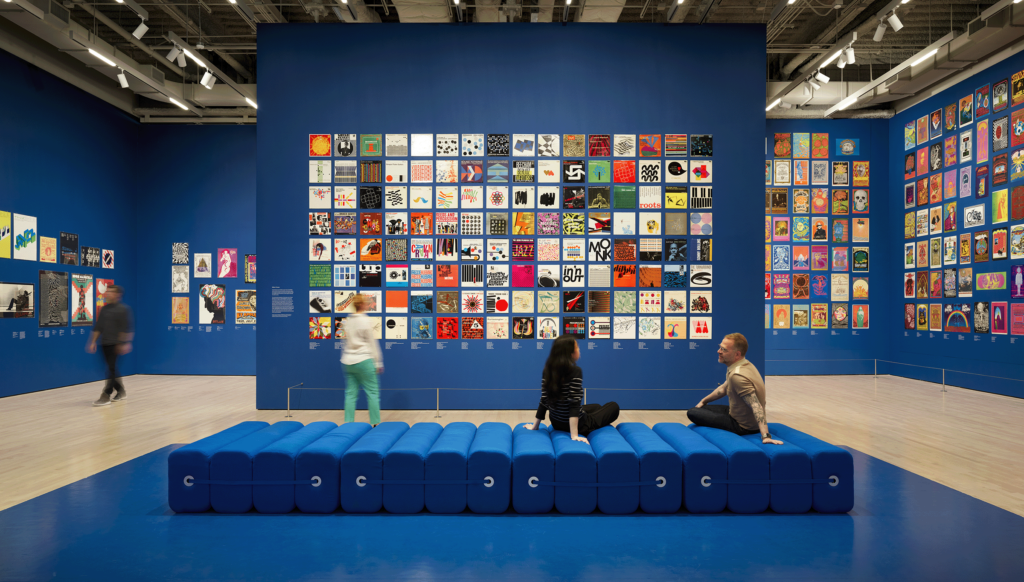
PL: Years ago, before Snøhetta designed the addition and the reconfiguration of the lobby, there used to be two large Frank Stella works on opposing lobby walls. I loved their visual impact and how they transformed the experience for visitors as they entered the museum. That was my favorite piece, then. Fast-forward to SFMOMA’s expanded building, its new director as of 2022, Chris Bedford, and some fantastic exhibitions; my favorites are Ragnar Kjartansson’s 9-screen video installation called The Visitors, which is playing through January 26, 2025; The Art of Noise, which just ended, lured you in with music compositions, a collection of radios spanning many decades and styles, and, my favorite part, a unique vintage collection of music posters from the 60s and 70s. Get in the Game is an upcoming exhibition from October 19, 2024, through February 18, 2025, looking at sports, contemporary culture, and how the two influence each other. My favorite piece in the show is the National Anthem by Kota Ezawa.
AL: What FMA project did you enjoy working on most and why?
PL: Much of the modern lifestyle is fragmented or interrupt-driven regarding communication and information flow, and I believe this negatively impacts the design and construction process. I’m blessed to be working with some phenomenal teams right now, and whenever a team finds its groove, great things can happen. Anytime a project team can achieve good energy, then communication and information flow are often good, too, and projects kick into high gear and overcome hurdles that otherwise bog them down.
AL: As the builder, how do you coordinate cohesively with the Architect of Record, interior designer, subs, and systems integrator?
PL: Great question! Many projects involve these roles, and progress is complicated without proper planning, focus, and communication.
AL: One of your first jobs was to apprentice with a master temple carpenter in Kyoto, Japan. What led you on that path, and what was the experience like?
PL: I found myself in Japan right after graduating from university in architecture. I spent several years at the university as the principal assistant for a community-based artist workshop called the Mountain Lake Workshop. The workshop created significant bodies of art with established artists from outside the community. I worked closely with avant-garde composer and artist John Cage several times, folk artist Howard Finster, and Japanese artist Jiro Okura. It was mainly the influence of John Cage, a student of the Buddhist scholar D.T. Suzuki, and Jiro Okura, that led me to Japan. There were a lot of amazing Japanese architects at the time, such as Fumihiko Maki, Tadao Ando, and Shin Takamatsu, and initially, I planned to work for one of these firms.
However, my plan quickly changed when I arrived in Kyoto because the traditional architecture and Japanese carpentry immediately blew me away. Realizing that’s what I wanted to study, I was able to eventually get an introduction to a temple carpenter, where I apprenticed for several years. It was hard work, six days a week, and learning from such highly skilled craftspeople was humbling. I was in my mid-20s, the youngest on the crew; the next youngest carpenter was 55 years old, and the oldest, the master carpenter, was 75 years old. It was a deep dive into a part of Japanese traditional culture that even most Japanese rarely saw, outside of being tourists who visited the temples and shrines.
AL: How has your time in Asia influenced your architectural aesthetics?
PL: Even though I’m a licensed architect, I’ve spent most of my career on the client side and as a builder, and not so much as a designer. Asia’s most significant influence on me as a builder and businessperson, however, is how I developed my ability to focus on the task at hand. Not to multitask but to give a task the time and attention necessary to complete it properly, an approach that stems from Zen Buddhism. My personal preferences, aesthetically, are heavily influenced by the concept of Wabi-Sabi and In Praise of Shadows, a book by Junichiro Tanizaki.

AL: You also worked in Doha, Qatar, and Gurgaon, India. What were the differences and similarities between the built worlds there and in the United States?
PL: I worked for Hines, an international developer, when they opened an office in Gurgaon, India, in 2009. I raised my hand to lead the construction of a new two-tower commercial office high-rise project for them there. My family and I uprooted from San Francisco and moved to Delhi, close to Gurgaon. The diversity of cultures in India is mind-boggling, and the differences between the built worlds of India and the U.S. are so far apart in many ways. However, the high-rise project was meant to align with international norms at the time for Class-A commercial office space and sustainability. Finding and procuring the right general contractor and subcontractors who could pull off glass towers to such standards was the biggest hurdle, and just as we were able to lock in the right contractor and subs, the global economic crisis caught up to India, and the project was shelved.
My family and I had been there almost a year when this happened, and without any significant construction happening in the U.S. at the time, I had to look elsewhere for employment. Through some connections, I landed a job in Doha, Qatar, working for a development company chaired by Sheika Moza, the wife of the Emir at the time and someone I consider a visionary for what she’s done for Qatar. We were in Doha for five years, and on the client side, I led many aspects of master planning, sustainability, and other design initiatives for a $6 billion urban renewal project comprising 100 buildings. Like India, there was significant focus (and success this time!) on delivering quality buildings that met the highest standards of international architecture, construction, and sustainability.
The Middle East is by far the most international in culture, design, and construction compared to the U.S., Japan, and India. That’s not to say anything negative about the latter countries, but rather, the Middle East has put a lot of emphasis on raising its standing in the eyes of the world by appropriating buildings, brands, and events typically found in the international sphere of influence. Countries like the U.S., Japan, and India have evolved more organically into unique identities over a longer time span.
AL: You started at FMA as a project manager, and after a 12-year segue into the commercial sector, you returned as a Principal; how does that trajectory influence your management style?
PL: Working on the client side for 12 years was foundational to my approach as a principal at FMA Builders because a builder needs to understand as much as possible from the client’s perspective to build a great project for them; this has been invaluable to me, as well as the experiences I gleaned from working on the client side in Northern California, India, Qatar, and Oklahoma City—four locales that taught me so much about people, processes, and culture. Ultimately, however, I think the most effective management style I strive to do well at is engaging people clearly and positively: treating people well and leaving the BS behind.
AL: How do you balance aesthetics with technology?
PL: As an architecture student at university, I was immersed in a design pedagogy influenced by the Bauhaus. We learned that form follows function and that there’s a balance or inextricable relationship between them where neither should subvert the other.
As an apprentice carpenter in Japan, I learned that technology (e.g., power tools and CNC machines) was great for quickly transforming a rough-cut wooden member into a nearly finished product. However, the skilled use of well-maintained hand tools achieves the best results for fine joinery or exquisite finishes. In my opinion, there’s a whole aspect of Japanese culture around the use and maintenance of tools, machinery, and implements that gives one a sense of how to strike a balance between aesthetics and technology.
Ultimately, technology should never undermine the user experience or built form (building or object) and should always support the creation of something meaningful in terms of use, form, and sustainability.


Amplified Lifestyles recently attended CEDIA Expo 2024. The Colorado Convention Center in Denver, CO, hosted the three-day event in September, during which attendees experienced cutting-edge innovation. The team explored new products from hundreds of technology brands. One of their favorites was Samsung’s latest additions to its MICRO LED portfolio of video walls. With a bold minimalist design in 89-inch, 101-inch, or 114-inch 4K pictures, it showcases intense contrast, full-spectrum color, and nuanced textures. The MICRO LED’s nearly invisible bezel allows it to blend seamlessly into its environment, making it ideal for architects and designers.

Are you looking for the perfect soundbar where floor standers interfere with the room’s aesthetics? The team recommends the Steinway & Sons Model S Soundbar. Assembled and finished by hand in Denmark, the elegant wall or furniture-mounted soundbar comes in matte or high-gloss black, gold accents and a whimsical musical string motif on the side panels. Audiophiles appreciate the Model S Soundbar’s extraordinary clarity, outstanding musicality, and mighty bass. Steinway Lyngdorf’s unique RoomPerfect™ technology adapts the soundbar to the room regardless of shape, size, and acoustic properties achieving the best possible sound performance.

Another manufacturer that seamlessly blends aesthetics with technology is Bluesound, a wireless high-res multi-room system. The Canadian company’s motto is “Living HiFi,” it makes wireless stereo components, speakers, and home theater products. Its designers, engineers, and individuals are audiophiles from the music industry, not the tech sector and its founders helped pioneer HiFi in the 1970s. Today, the Bluesound ecosystem delivers cutting-edge musical detail, texture, and volume, reflecting music true to the artist and genre. The digital platform can connect up to 64 players through the BluOS Controller App.

Another architectural winner was the newly engineered Sonance SA4-66 speaker, which the company debuted at CEDIA Expo 2024 to complement its James Small Aperture® Series. The cabinet contains a subwoofer and tweeter with a small 4″ opening that installs discreetly into the ceiling for incredible sound. Sonance offers square or round grills recessed or beveled to match the ceiling lights. The SA4-66 works for drywall and solid ceiling applications and fluidly integrates into any design style.

With people having multiple homes and needing to provide controlled access for family, friends, and service people, stylish smart locks are a necessity. The Amplified team found Level Lock +. Not only does it provide different aesthetic choices, but it also factors in different tech preferences. You access it with your voice, phone, keypad, a key card, or, for the Luddites, a manual key! In our new hybrid work world, you can track everyone’s comings and goings from the app, which is excellent when homeowners co-exist with the people who help keep their homes running.
Collaborator Profile: Lighting Designer Eric Johnson
Amplified Lifestyles is fortunate to collaborate with many elite industry partners on their projects. One of these is the lighting designer Eric Johnson of EJA Lighting Design. Lighting was Eric’s destiny as his father, Merlin Johnson, invented, developed, and manufactured an optical lighting framing projector in 1969 for fine art. Today, EJA Lighting Design’s portfolio ranges from a fanciful Victorian-styled Sonoma Valley Lake House designed by Ken Fulk to EYRC Architects’ award-winning modernist home in Palo Alto. Amplified Lifestyles worked on both projects, and the two teams blended aesthetics with technology while focusing on the client experience.
AL: Your lighting legacy extends beyond your father, Merlin Johnson, to his mentor, Rudolf Wendel. Did you always want to be a lighting designer?
EJ: I started working in my father’s business in high school, so I was interested in the lighting and electrical world from the start. At the time, I wasn’t sure where it would lead, but over the years, it was clear that lighting design was where I wanted to go.
AL: With your origin story starting in art lighting, what are your thoughts on Ketra’s abilities to illuminate art and residences?
EJ: Ketra has elevated the LED color and control options beyond what has been done in the past. It can be an excellent tool for art lighting to enhance all types of art, but the lighting also needs to be designed by a true lighting professional for the best outcome.
AL: What have been the most significant changes in lighting design over the last forty years?
EJ: The big ones are energy codes (i.e., Title 24), lighting product technologies (i.e., halogen, fluorescent, LED), and lighting controls. Lighting design has become a highly technical field that requires constant product knowledge updates and very detailed integration into the architecture. Also, project teams are much larger, which requires a higher level of collaboration in terms of frequency, efficiency, and setting expectations.
AL: How do you balance the artistry of lighting with technology?
EJ: There are a lot more tools to work with than in the past, which opens up more opportunities to create the design you are after. Architecture and interiors have also gotten more diverse, so there is also more opportunity to be creative with lighting. From my perspective, it is important to keep in mind that even though there are many new lighting solutions, try to be thoughtful and not to overdo it (bling).

AL: How does the lighting designer coordinate with the architect, interior designer, builder, and systems integrator?
EJ: We take the team approach very seriously to achieve the best outcome. Each design/construction discipline requires intentional effort to get to know the teams and understand how to best merge all the information to achieve the desired result. Ongoing relationships are beneficial in strengthening the team and the process. We are very fortunate to have had so many great collaborators to work with over the many years.
AL: What questions do you ask the homeowner to determine how they want to live with lighting?
EJ: There are many questions to ask at the beginning of the process. The first question is, what knowledge do they have about lighting and controls, and what have their experiences been like in the past, good or bad? We then dive deep into all aspects of lighting and controls to gather as much information about their intent as possible before starting the process. The more experience you have with different clients, the better you become at obtaining the information you need.
AL: What was your favorite job?
EJ: It is hard to come up with just one, but one of my first major residential projects was with Ricardo Legorreta, who was one of the top architects in the world at the time. The owner had confidence in me and said that I would be taking over the lighting design. It was an amazing experience all around, and it didn’t hurt that they had a world-class art collection.
AL: Where do you see lighting design going in the next decade?
EJ: LED technology and lighting control will continue to improve, but they will also become more technical. Energy codes and dark sky compliance will continue to have a big impact on all aspects of design. AI is starting to impact certain levels of design, and I assume that will continue in the future for all aspects of design.


We think of Lutron Electronics as a technology-driven company, but its co-founder, Joel Spira, was equally fascinated by aesthetics and how light affected mood. In 1959, the young physicist worked from a spare bedroom in his Manhattan apartment and developed the solid-state dimmer. He called his invention Capri and aimed his marketing efforts toward women, not electricians. Spira repurposed the original elegant gold package displaying the Lutron logo and verbiage from an overrun of perfume boxes. With a turn of the Capri knob, the homeowner could light up, mimicking bright sunlight, or light down to imitate the flicker of romantic candlelight.

The idea was radical then; residential lighting control didn’t exist. It was limited to theaters and stage lighting because it required expensive, bulky rheostats that wasted energy and were challenging to install. Lutron’s family of offerings grew, and from their Pennsylvania headquarters, Spira developed a litany of lighting controls that integrated into a home’s design, providing functionality while highlighting architectural details.
In 1971, he introduced Nova, the first linear slide dimmer. In 1989, Lutron followed this with RanaX, the first infrared remote control dimmer. The next evolution was the 1990 NeTwork, the first whole-home lighting control system. Later, network-style dimming products ensued, including the customizable GRAFIK Eye in 1993 and the RadioRA in 1997, which operated wirelessly using radio frequencies. In the late ’90s, Lutron added HomeWorks, which became the industry standard for residential lighting control. With the addition of automated shades, the company controlled solar lighting and electricity.

Lutron was always a family business; Sprira co-founded the company with his wife, Ruth Rodale Spira. Mrs. Spira handled Lutron’s marketing efforts, including the “dial-up romance” ad campaigns for the Capri. The company expanded its offerings to encompass window shading systems and energy-conscious devices. But Spira was always remembered for pioneering the dimmer. When he passed away in 2015, his New York Times obituary stated he “changed the ambiance of homes around the world and encouraged romantic seductions of all types.” His wife died in 2019.
Today, Spira’s daughter, Susan Hakkarainen, is Chairman and CEO of Lutron Electronics. She started as an engineer with a BS and MS in Electrical Engineering from Cornell University and a PhD in Applied Plasma Physics from MIT. She soon went on to international assignments and more senior roles. Sharing her mother’s aptitude for marketing, she became CMO. As Chairman and CEO, Hakkarainen continues Lutron’s commitment to world-class quality and service standards and promotes its position as the leader in smart lighting and shading control solutions. Her philanthropic endeavors include serving as a Trustee of the Asia Society, on the Advisory Board of The Wolfsonian–FIU, and as a former Trustee of Pratt Institute.
Shades of Pink: Arquitectonica’s Pink House
Before the Barbie film exploded on screens with a color palette of 100 different shades of pink, Arquitectonica created Miami Shores’ Pink House in 1978. The waterfront villa, fabricated from concrete and clad in stucco with glass-block windows and a voyeuristic porthole, echoed South Florida’s Art Deco and Modernist architectural vernacular. Its architects, husband and wife team Bernardo Fort-Brescia and Laurinda Spear boldly painted its planes in five shades of pink ranging from a whisper to near red. An exterior row of royal palm trees and an interior lap pool complete the tropical cadence. The project helped launch their Coconut Grove-based firm. Today, Arquitectonica is a global company.

Miami of the seventies was no longer the Magic City that vacationers flocked to post WWII through the sixties. South Beach’s Art Deco district sat decaying with hotels falling victim to the wrecking ball. The city became known for elderly retirees and violent Cocaine Cowboys. At Miami’s lowest point, in 1981, it was the crime capital of the US. Arquitectonica’s Pink House signaled a cultural change. Its status went beyond the architectural academia of Progressive Architecture and Domus when mainstream publications featured it. The New York Times, Life, Time, Newsweek, House Beautiful, Vogue, and GQ showcased its rosy hues and edgy lines. In 1984, the new crime drama TV series Miami Vice chose the Pink House for the home of an arms dealer played by Bruce Willis.

Miami Vice displayed Arquitectonica’s glass-clad, primary-hued Atlantis condominium building in its opening credits. The Biscayne Bay high rise, with a touch of magic realism, boasts a cut-out five-story sky court that includes a palm tree, a red spiral staircase, and a round pool. Its architects, the Peruvian-born Fort Brescia, and the American Spear represented the city’s cosmopolitan mix. They brought Miami academic credibility with Ivy League educations, Fort-Brescia from Princeton and Harvard, and Spear from Brown and Columbia. Their work pierced the Miami skyline and the international psyche. Arquitectonica now has offices in eleven cities in the US and beyond; it started with the Pink House.
The Wright Way: Frank Lloyd Wright’s Northern California
Frank Lloyd Wright’s Marin County Civic Center etches the landscape, and his Maiden Lane Mousetrap has had as many lives as the two white Persian cats who once lounged there. Wright’s Northern Californian residences are equally as evocative. The Wisconsin native, who passed away in 1959 at 91, enjoyed a creative relationship with the Golden State. His Carmel by the Sea project, known as Mrs.Clinton Walker House, designed in 1948, resembles a ship with its bow cutting through the ocean. Della Walker requested a home “as durable as the rocks and as transparent as the waves.” Constructed of cedar and Carmel stone and on the National Register of Historic Places, the property recently sold for $22 Million.

The Hanna–Honeycomb House on the Stanford University Campus, recognized as a National Historic Landmark, was Wright’s first work in the Bay Area. Started in 1937 and expanded over 25 years; the architect patterned the design after a bee’s honeycomb. The one-story structure clings to the hillside on a one and half acre site. Wright selected native redwood board and batten, wire cut San Jose brick, concrete, and plate glass for the construction, which included a main house, guest house, hobby shop, storage building, double carport, garden house, pools, and water cascade. The Hanna family lived there for 38 years before giving the property to Stanford University in 1974.


Wright strongly believed in creating dwellings for middle-class Americans he called Usonian homes. One was the mid-century owner-built Berger House in San Anselmo which he designed for Robert Berger, a mechanical engineer, his wife Gloria, and their four children. The stone, glass, wood, and concrete residence, which cost $15,000 to construct plus Wright’s $1,500 fee, was listed for $2.5 Million in 2012. Berger worked building the home for twenty years until he died in 1973. His widow hired a professional carpenter to finish the project, including Wright-designed furnishings. One element did not survive to the present; Edie’s House, a dog shelter that Wright designed for the family’s Labrador Retriever. Unfortunately, Edie preferred the main house, and the canine home was taken to the dump.
Take 10 with Jeremy McKenzie
Amplified Lifestyles Principal and General Manager, Jeremy McKenzie started his career in 1995. As with many of his colleagues, he approaches custom residential integration as a craft. Jeremy has engineered, installed, programmed, and directed a comprehensive selection of platforms through the years. He takes pride in the process, not just the outcome, and values client and team relationships. When not working, he explores the vast Western landscape on his motorcycle or enjoys live music venues with his family.
AL: Do you have a favorite affirmation or quote?
JM: Satisfaction lies in the effort, not in the attainment.
AL: What motivated you to become a partner in Amplified Lifestyles?
JM: From the beginning, the group’s guiding principles and goals aligned with my own. With 20 years of experience in the industry at the time, I had a lot to offer to the team in my role, and I was ready to commit to having Amplified become a part of my personal identity and daily life. I wanted to bring my total effort and attention to help build a great environment to work in and a better option in the market.
AL: What have been the challenges and opportunities that you have found as a partner at Amplified Lifestyles?
JM: The greatest challenge has been growing the company while working to maintain what makes Amplified special: how we conduct ourselves and support each other and our project partners. The most significant opportunity this has afforded me is the ability to work day-to-day with such dedicated and incredible people. To see people learn and grow in this industry and enjoy what they do. It is a tremendous blessing.

AL: What would be your dream project?
JM: For Amplified, the ultimate reward comes in a job well done. Regardless of the size and scope of work, the dream job is any project we complete with a satisfied client, a happy build team, and ongoing relationships with both. Many of us got into this industry because of the awe you see on a person’s face when they experience their first great Home Theater; it all grows from there.
AL: If you were not in home technology design, what would you do?
JM: I would have ended up somewhere in mechanical engineering, likely in the automotive or motorcycle industry. I am fascinated by complex mechanical devices, emphasizing internal combustion engines (which appear to be on their way out!). I often relax on the sofa with a technical manual.
AL: Song you can listen to on repeat?
JM: Right Where It Belongs by Nine Inch Nails. Moving but not too heavy.
AL: If you made a documentary, what would it be about?
JM: Something so compelling to me is the nature of how we as people express and feel love for each other. It is incredible how some people can be so giving and selfless, putting their needs, wants, and interests aside to care for someone they love in the face of great tragedy or perhaps due to sickness or injury of the other. A parent who dedicates their life to caring for their special-needs child, or a spouse who does the same for their partner, it is incredible to see people flourish in the face of such tremendous adversity, and at the core of it is the power of love.
AL: What are three things you can’t live without?
JM: My wife Jennifer, a motorcycle, and extra toasty Cheez-its!

AL: How do you recharge?
JM: Riding motorcycles is a spiritual experience for me. It is a part of who I am, and I will ride until I physically cannot. It offers a wide variety of soothing and intense experiences, from cruising along a deserted highway in the vastness of the Nevada desert to scraping the ground at the apex of a corner, pushing the physical limits of man and machine.
AL: Best advice you’d give your teenage self?
JM: Don’t worry so much about school and whether you leave it with a direction. Hard work, dedication, and moral character will take you wherever you need to go; doors will open when you are ready for the opportunity.
The Timeless Appeal of Eichler Homes
Amplified Lifestyles has long admired the California mid-century Eichler Homes built by developer Joseph Eichler (1900 – 1974). These light-filled houses are recognizable for their recessed entryways with broad, low-gabled roofing. While small windows faced the street for privacy, large picture windows at the back look to unobstructed views of the outdoors. Wood entrances, exteriors, paneling, and exposed widely-spaced posts and beams further emphasize the house’s connection to the natural world. To streamline the interiors, the developer utilized built-in furnishings and appliances. Open-concept kitchen, dining, and living areas, sometimes with glass partitions and central atriums, allowed homeowners to blur the line between the inner and outer worlds.

Eichler did not begin his career as a real estate developer but as a purveyor of butter and eggs. The native New Yorker moved to the San Francisco Bay Area in 1925 to help with his in-laws’ wholesale business. By 1943 he owned a retail store Peninsula Farmyard specializing in eggs and poultry. At the time, he and his family rented the Sidney Bazett House in Hillsborough, a Usonian-style residence designed by Frank Lloyd Wright. The experience of living in a Wright house inspired Eichler to create communities of homes that incorporated modern architectural elements for the average family. With millions of soldiers returning from WWII, the time was right.

In 1949, Eichler Homes, Inc. started building affordable residences designed by the Bay Area architects Robert Anshen and Steve Allen of the architecture firm Anshen and Allen. The architects masterminded the California Modernist style of the homes that first went on the market for an average sale price of $12,000. Later Eichlers were designed by Claude Oakland, A. Quincy Jones, and Raphael Soriano. Having experienced discrimination in New York for being Jewish, the developer advocated fair housing, selling homes to Asians and Blacks. Between 1949 and 1966, Eichler Homes built over 11,000 houses, primarily in San Francisco Bay Area suburbs. Today, their timeless appeal endures.
Take 10 With Casey Webster
For Amplified Lifestyles’ principal Casey Webster his eighteen-year career in the home electronics industry has made him committed to the client experience. It is a philosophy that Casey shares with the other managing partners. While Amplified is always searching for the latest integrated system technologies and solutions, the team and their dedication to customer service make the company unique.
AL: What drew you into the world of home technology?
CW: I wouldn’t say I was drawn to the world of home technology. Honestly, I fell into the industry without any knowledge or expectations, just a need to put myself through college. My roommate worked at Starbucks next to an electronics store, and one day while waiting for her to get off, I filled out an application to pass the time. The funny thing is when they called to offer me a job; I initially turned it down. It was summertime, and I was too busy being a “College Student” enjoying the San Diego weather. Later in the year, I got another call requesting I reconsider their employment offer, and this time the timing was right.
AL: Since you have experience in many facets of the industry, which do you enjoy most and why? Systems design, installation, or operations management?
CW: Customer service. I enjoy working with our customers and building partners to establish lasting relationships, solve problems, and create unique experiences.
AL: Can you elaborate on your mantra, “Flash and flare are fun, but at the end of the day, all that matters is if it works?“
CW: Many A/V companies get caught up wanting to say “Yes, we can do that” to win their clients. They jeopardize the reliability of aspects of home technology used 99% of the time for the one-off use case. Often less is more.
AL: What have been the challenges and opportunities that you have found as a partner at Amplified Lifestyles?
CW: The biggest challenge is also our greatest opportunity. Before starting Amplified, I founded another home technology company still operating in Southern California today. That experience opened my eyes to the biggest problem in our industry, and I was one of them, “The AV Guy”.
My second time around, I wanted to ensure I built a Team for our clients to outlast any individual. Everyone experiences life changes; your home technology’s serviceability shouldn’t hinge on whether your “AV Guy” decides to move out of state or retire.
Intending to build a Team, I was fortunate to meet incredibly talented people early on with Jeremy McKenzie, Kevin Cook, and Tim Johnson. It was clear that restructuring Amplified with this Team as equal partners was the best way to put an end to “The AV Guy,”

AL: Who is your ideal client?
CW: My ideal client is someone who values our time and expertise. As the industry has evolved, the products we provide become more commonplace, and our true offering is our people.
AL: How would you define your work in three words?
CW: Creative, Controlled, Chaos
AL: How do you maintain a work/life balance?
CW: I think most people would say my work-life balance is out of balance, but I genuinely enjoy working. It’s not the work that is always enjoyable but seeing the results of your hard work is the reward. That being said, my family is my pastime, and having a flexible schedule to be a part of my children’s lives and experiences makes it all worth it.
AL: A skill you’re working on mastering?
CW: Parenting.
AL: What are three things you can’t live without?
CW: Friends, Family, and Reese’s Peanut Butter Cups.
AL: Who would it be if you could switch lives with someone for a day?
CW: I don’t have a particular person I would switch lives with, but I would love to experience the world in a different period in time. Time travel would be my superpower if I could have one; switching lives with someone from the distant past would be awesome.


Amplified Lifestyles is excited about the return of The San Francisco Fall Show after its absence during the Pandemic. What does electronics integration have to do with art and antiques? Amplified’s Senior Technology Advisor, Robert Gilligan, worked on the 2014 show, “The Rush of Gold: Precious Metals in Art & Antiques.” For the Opening Night Gala, the Grand Entry Hall at Fort Mason’s Festival Pavillon deftly juxtaposed the city’s past Gold Fever with its current digital gold rush.

Tom Klingerman of the New York and San Francisco Bay Area architectural firm Ike Kligerman Barkley designed a larger-than-life immersive spectacle. Six monumental 20-foot-high projection screens splashing videos of gold nuggets, gold watches, giant goldfish, and champagne bubbles greeted gala attendees. The architects and general contractors utilized existing metal towers combined with black drapes suspended from battens. The wood frame and shiplap panels were painted high gloss black with International Orange metal frames to match the Golden Gate Bridge. Robert was the man behind the curtain, or in this case, up in the rafters supervising the projectors. The event, which attracted 60 plus world-class antique dealers, sold various gilded art, antiques, and objects, including a six-pound gold nugget for $400,000.
This year marks the show’s 40th year and it runs October 13-16, 2022. The Fine Arts Museums of San Francisco is the new beneficiary for the opening night gala on October 12th. While we do not know the design of the Ruby Red themed Grand Entry yet we have the names of the four designers selected for Designer Vignettes: David Oldroyd,ODADA; Emma Burns and Philip Hooper – Sibyl Colefax & John Fowler; Cathy Kincaid – Cathy Kincaid Interiors; Alex Papachristidis – Alex Papachristidis Interiors. We look forward to seeing the visions they create incorporating unique pieces from the show floor and elsewhere.
Accessibility Tools